
 Lifecanbetoff
A recent Monday evening natter with my girlfriends got us on the topic of sustainable swaps and what we can do to be more environmentally friendly in our everyday life. Cue a sustainable swap shopping spree by me!
It all started with the bag for life – but there’s so much more we can do!
Why does it matter to make sustainable swaps?
We’ve all seen the detrimental effects our throw-away society has on our planet. The UK government’s 25-year Environment Plan sets out its targets to improve our environment and leave it in a better state than we found it.
We’ve seen the fight against single-use plastics with the introduction of carrier bag charges, the ban of plastic straws or stirrers, banning microbeads in rinse-off cosmetics such as shower gel, and efforts made in reducing the use of disposable coffee cups. Many companies are making huge moves toward being sustainable and friendly to our environment.
There’s also a lot of emphasis on greener homes and energy and emission reduction to fully electric cars (I have a company self-charging hybrid car called Greta).
But, there are some swaps you can make yourself, not just plastic swaps but environmentally friendly swaps. This is an area I’ll be making more effort to improve upon in my own life.
I’m not saying that these changes will make a huge impact on my own, but collectively we can make a massive difference.
If you want an easy way to get hold of sustainable swaps, Between Green supplies a wide variety of sustainable products but also has a really helpful subscription service. Helpfully, they are letterbox friendly so you don’t need to be home to take delivery!
Cleaning products
This is the area of my first sustainable swaps shopping spree purchases. There are several cleaning products available on the market which offer a more environmentally friendly option using fewer, or no harmful chemicals to clean your home.

Of course, the concern that comes with this, is if you can still disinfect and appropriately clean your home without using harsh chemicals?
Apparently, you can! Of course, you can opt to make your own too. Here’s some homemade cleaning products to try.
For a while, I’ve been using the Ecover washing-up liquid. It’s available in my little Tesco so expect it can be found on most supermarket shelves near you.
This product is made with plant-based ingredients with its packaging made from 100% recycled materials. Personally, I love the fragrance I get and find it cleans my dishes just as well as its well-known rivals. However, my only criticism is that it doesn’t feel as bubbly as other brands so I find myself using more of it to get a good froth!
Of course, there are other brands available and the larger brands are more widely available with your weekly grocery shop. Some local farm shops also offer eco-refill stations of cleaning products, so it’s worth checking them out too.
They can sometimes come with a higher price bracket, but for the cost of helping save the environment – I don’t mind spending a few extra pennies!
Dirty Laundry!
Ok, so technically this could come under the cleaning products but I felt it needed its own bracket.
My recent sustainable swap purchase was for the Ecoegg. This little egg reduces single-use plastics by eliminating the need for separate laundry detergent and conditioner, is kind for your skin, and contains no harmful chemicals. Plus, it helps save money as it is more cost-effective per wash than its alternatives.
You initially get 70 washes from your egg and can purchase 50 wash refills. The egg itself is recyclable so when it has had its day, you can recycle that too.
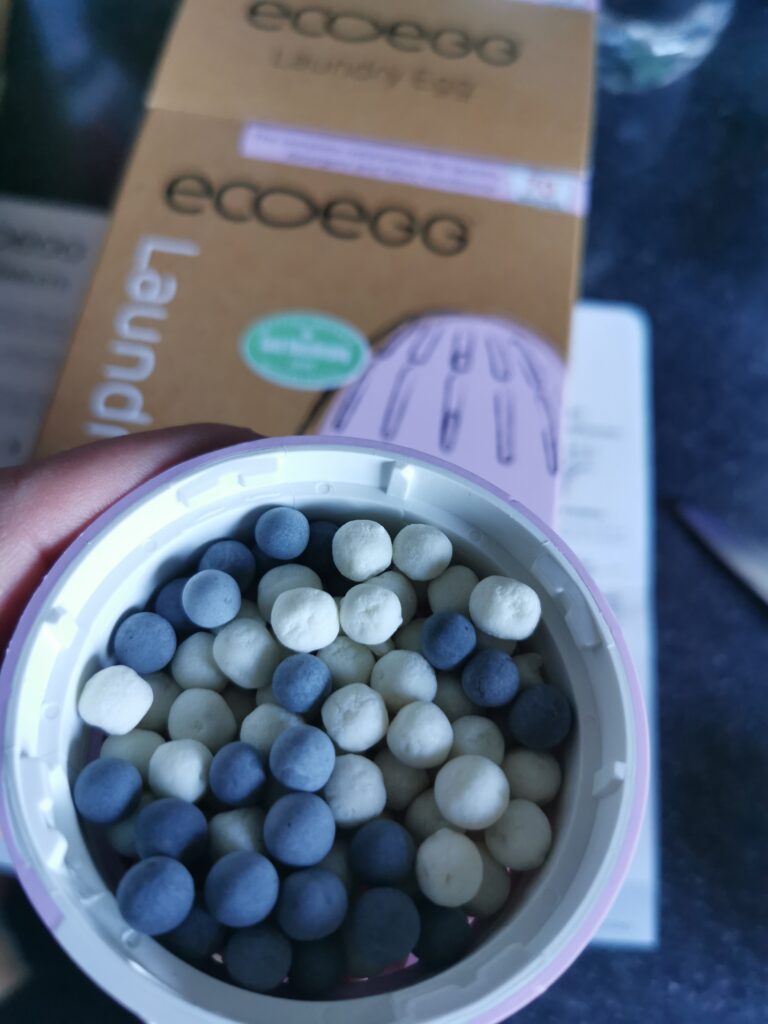
I was initially skeptical thinking that it would not get my laundry as clean as I’d like, and I’d read reviews of other sustainable laundry options as being a bit dull on the fragrance front.
The fragrance is also down to a mind-over-matter situation, synthetic fragrances can be used in some detergents, giving off the impression that our laundry is clean – but is it really?
My first use using the Ecoegg (after detoxing my machine of previous chemicals) was on some white sheets the dog had got mud on. In went the sheets, in went my Spring blossom Ecoegg and I turned it to my usual 60-degree cotton wash. Part of me was expecting to see the stain still there, but it was completely gone and the smell of the laundry was lovely. The smell was not overpowering and it looked and felt clean. Even naturally drying it, did not leave it feeling stiff – of course, the real test will be my towels!

My usual 30-degree wash for clothes has also resulted in lovely smelling, clean clothes.
Hurrah! It works, a successful swap!
My only criticism of this would be, it’s quite clunky in the machine!
Travel mugs and reusable bottles
Did you know that many of the disposable coffee cups on the market contain a layer of plastic on the inside of the cup?
Don’t be fooled by the term biodegradable either – many of these products take many years to break down into the earth, needing the right conditions to do so.
The alternative – take a reusable cup with you. I’m a fan of china reusable mugs, I hate the taste of my tea in some of the metal alternatives.
Dragonfly and Blossom a local favourite company of mine, has a lovely range of fine bone china travel mugs.
I’ve also got a cupboard full of reusable water bottles.
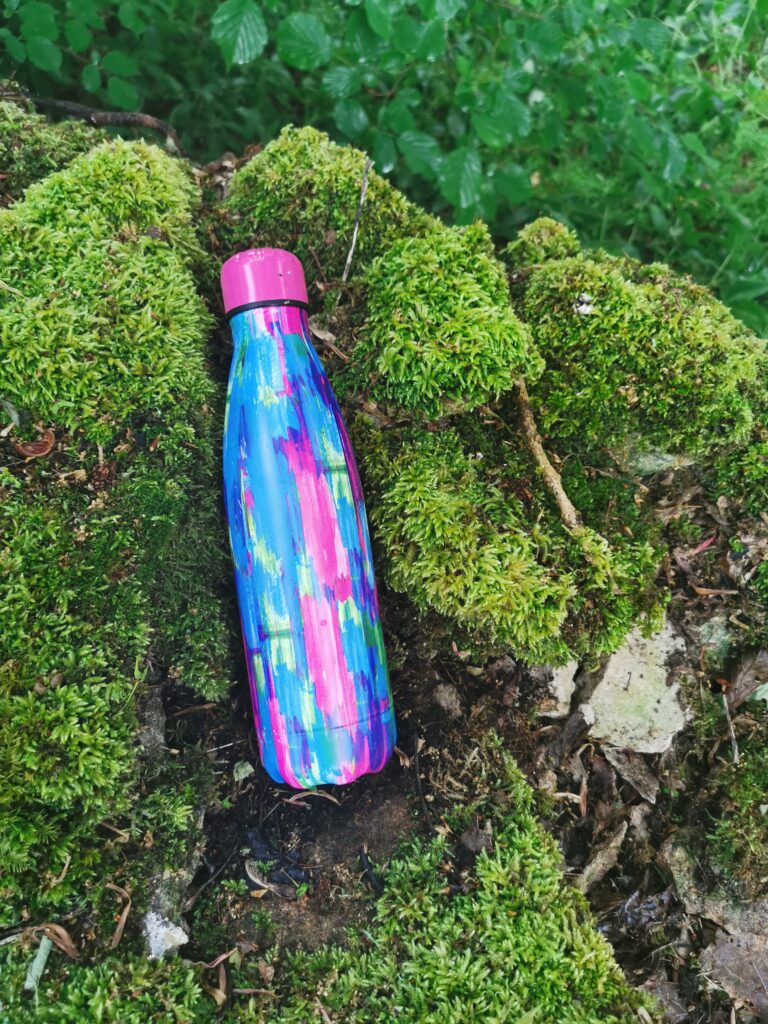
My favourite is a funky insulated double-walled number from Neon Sheep.
Coffee pods and Teabags
Did you know that teabags contain plastic?

A common misconception is that teabags are compostable. However, many contain polypropylene, which is what the tea bags are sealed with. So, by putting them in your compost you’re actually putting in toxic chemicals which will eventually seep into the ground. Biodegradable product is used by some brands which requires the right conditions to break up into the ground.
You can of course go for loose leaf as an alternative. There are some brands out there that are making extra effort to go completely plastic-free. It’s worth a bit of research if you’re wanting to make that change.
Coffee pods are also a huge issue, with many not accepted by local recycling collections. Some brands are getting on board with the biodegradable option. This is a step in the right direction and some brands offer a recycling service for the used pods.
My coffee machine uses the Lavazza eco caps which are compostable.
There’s a whole lot more we can do to halt food waste too. Another area I need to do better in.
Personal care

I’ve noticed a lot of new subscription services and products come on the market, helping us to make environmentally friendly sustainable swaps. Of course, things like handmade natural soaps have long been on the market too.
Last year, I swapped out my disposable razor for an FFS Beauty razor subscription. The service provides you with a reusable quality metal handle and a razor recycling scheme on a subscription basis. The razor is bloody good too and the subscription service is really flexible to suit your fuzzy needs.
My most recent swap has been in an effort to reduce the amount of plastic waste and in particular, with shampoo bottles. I purchased a Gruum shampoo bar. Now, I’ve only briefly used the “Nourishing” coconut bar, and my initial reaction is positive.
I’ve tried other shampoo bars before and hated the waxy feeling it left on my hair, and so far the Gruum bar doesn’t do that. I’ll be seeing how that pans out!
I’m also awaiting the delivery of a Wild deodorant. This is another subscription service though you can purchase on an individual basis. The product is aluminum-free which is my reason for choosing it, but it also offers compostable plastic-free refills. Of course, the effectiveness of this deodorant is a huge consideration for me and if it doesn’t work, I will seek alternative options. With it being aluminum-free it is not an antiperspirant, but the company promises that its natural ingredients help absorb moisture to keep you dry. Watch this space!
I’ll be looking for an alternative for shower gel too which often comes in lots of plastic packaging!

Sustainable Swapping continues
That’s only the start of my sustainable swaps journey, there’s a still long way to go including the dreaded cling film and foil debacle. I’m intrigued to try out some of these Sustainable Podcast episodes to get some more tips too.
There are many other areas you can help the environment too, from swapping books for kindle or making use of the library and swap services, purchasing local produce and watching your food miles, supporting sustainable agriculture, and by recycling and upcycling items instead of buying new. Little things can and will help if we all make the effort together.
This post from Chronicling Home on ways to make your home more eco-friendly is a great start too.
What’s been your favourite sustainable swap, or what’s an area you’d love to become more sustainable in? Let me know in the comments.
Peace out!
Jangles x
This post is not sponsored and does not contain affiliate links, all thoughts are my own based on my own research and experience of the products I’ve used.


Great post, I love reading about swaps people are making. If you need some cleaning tips I make my own cleaning products from ingredients like vinegar, bicarb, essential oils and they are so simple.
Homemade cleaning products are certainly a great way to know what you’re using. People forget things like lemon and vinegar are great to use! I just never get round to actually doing it
I have recently swapped to Shampoo bars, I can’t get over how good they are, I was really dubious about how well it would work but I was pleasantly surprised. Not so keen on the conditioner bar so need to try some others but I will definitely continue with the Shampoo one 😍
I’ve been really impressed by the shampoo bar. It hadn’t lasted quite as long as a bottle of shampoo but it left my hair feeling great!
[…] also currently trialling eco-friendly soaps, washing up liquids, kitchen towel and toilet rolls. Life can be toff has some more great ideas for sustainable swaps so make sure you check those out too! When a company called FOOGO Green got in touch to showcase […]