
 Lifecanbetoff
We are all well aware that a good night’s sleep is paramount. But, in this fast-paced world, we tend to put sleep low on our list of priorities and don’t have a fixed bedtime routine. Which might be having an impact on us during our waking hours.
I’ve been having some problems sleeping of late and thought that it was time that I established a healthier bedtime routine. Of course, there are plenty of ways to give ourselves a much needed boost too.
Why do we need sleep?
Sleep is an essential function that allows both our mind and body to reset, recharge and prepare for our waking hours. Without enough sleep, our brains are unable to function properly which can lead to a lack of concentration, unable to think clearly, or impair our motor functions.
Sleeping is as important to us as eating or drinking. Everyone is different and it’s recommended that adults get between 6-9 hours of sleep each night.
Sleep Patterns and cycles
According to the Sleep Charity, we enter a series of sleep cycles once we’ve closed our eyes. Our heart rate drops, our body temperature falls and we experience complex changes in brain activity so that we experience different stages of sleep.
We sleep in stages of four. When we first fall asleep we enter non-rapid eye movement (NREM) sleep which happens in three stages and different levels of deepness of sleep. The fourth stage is known as rapid eye movement (REM) sleep and this is the stage of sleep in which we dream.

Many fitness bands or smartwatches have the ability to track our sleep and monitor our sleep patterns. They make for interesting reading, particularly when you feel you may have had a rough night’s sleep they’ll show where you had the different stages of sleep and for how long.
Establishing a bedtime routine
Why is it important to establish a bedtime routine – isn’t that just for kids? We will all recall those routines when we were kids, bath, brush teeth, read and bed. I certainly haven’t forgotten my mum telling me it was time to climb the wooden hill to Bedforshire…!
But, a proper bedtime routine, much like when we were kids, helps us to wind down properly before bed and therefore, promotes a better chance for a good night’s sleep. What you do in that time is up to you entirely, but the following are some methods that I use as a bedtime routine.
Cut down on device time
I’ve talked previously about my need for a Digital detox. Time spent before bed is one of the most important times to put down that phone or tablet and even the TV. Electronic devices emit a blue light which tricks your brain into thinking its daytime and as a result, works to stay awake. This piece on why it’s harmful to use your phone before bed explores more.
Putting the device down 30 minutes to an hour before going to bed will help your mind chill and relax. Allowing you to get to sleep. Checking my device when I’m in bed is one of many bad habits that I need to kick!
Establish a set bedtime and wake up

Ok, so now we’re really talking children right?
Wrong. Establishing a routine time to go to bed and wake up helps train your brain to know when it’s time to wind down ready for sleep. Setting a bedtime means you can start your bedtime routine consistently every night. Having a consistent wake up routine also helps if you’re looking to build in a healthy morning routine.
Since the first lockdown, I set an alarm only when I need to wake up earlier than usual. My body naturally wakes up around 6.30am and it’s only been on the very rare occasion where I’ve woken up later than that. I also have a fairly consistent bed time, but like to read before going to sleep. Which brings me to my next point.
Reduce anxiety by reading or writing
You’ve put down your phone, what the hell are you meant to do now? Have a conversation?
I like to read for at least half an hour before bed. I often find this helps set me into a state of relaxation and usually, I’ll end up dosing off with the book in my lap.
Occasionally, but very rarely, I will journal or write out my to-do list for the following day.
I’ve often been told that writing down your to-do list helps push it out of your brain and onto the paper so you’re less likely to wake up stressing about what you have to achieve the following day.
Have a light snack or hot non-caffeinated drink

There has been a number of occasions where I have instantly regretted having a late, big meal. It sits heavy on my stomach, causes acid reflux and just generally leaves me feeling uncomfortable throughout the night.
Equally, there have been times when I’ve woken up by a deep growl only to discover it’s my belly rumbling. Find a comfortable middle ground by having a light snack like some fruit or a yoghurt before hitting the hay.
You can also use food to enhance your mood, either before bed or during the day.
Having a nice non-caffeinated tea* before bed is a nice way to help you wind down. I often enjoy a nice cup of lemon verbena tea which helps if you have trouble sleeping or digestive issues (amongst other benefits). *Other hot non-caffinated drinks are available, and whilst hot chocolate seems a nice way to end a day, don’t do what I do and ply it with whipped cream and marshmallows as you’ll only see sounds…!
Although alcohol may make you feel sleepy because of its sedative effect, it actually prevents you from getting the important deeper REM sleep. This is because as alcohol starts to metabolize, the sedative effect wears off causing you to sleep lighter. It can also contribute to nightmares, sleep talking or walking, and can also affect your breathing.
Meditation or yoga
A daily yoga routine has apparently been shown to improve sleep quality. Light yoga, a few simple stretches, and breathing exercises can go a long way to help you relax.
The same goes for meditation. Mindfulness meditation teaches you to manage emotions and thoughts, enabling sleep onset, rather than stress about not being able to get to sleep. There’s a reason counting sheep is rumoured to help you get to sleep!
You might even be brave enough to try an acupressure mat. Similar to acupuncture, acupressure stimulates sensitive points which studies show can induce relaxation.
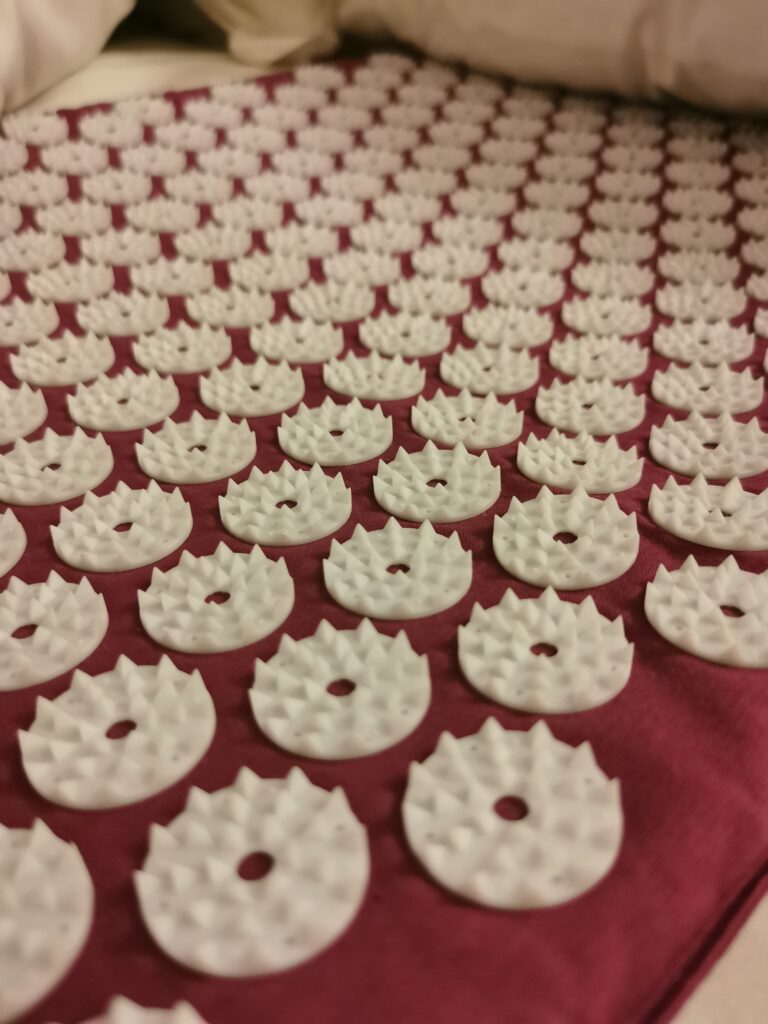
I was given one by my mum for Christmas. After the initial torture-like feeling of laying on those spikes I will fall asleep on it. My mat relieves tension and stimulates the pressure points which help me to sleep. I’m left feeling zen and usually fall asleep before I know it!
Mine isn’t a Shakti mat but information is available on their site if you’d like to learn more about acupressure mats.
Open your senses with aromatherapy and essential oils
I’ve already talked about the benefits of essential oils and the use of a diffuser with a wide selection of therapeutic oil blends available to help promote a good night’s sleep.
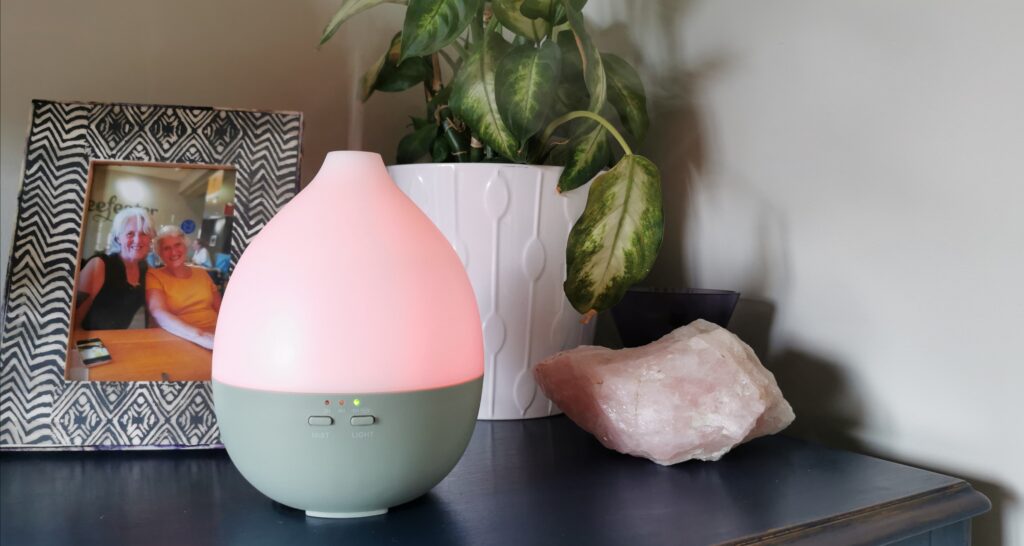
Of course, if you have pets (and cats in particular) you should check which oils are toxic to them before using them.
There is also a wide variety of pillow sprays on the market. A simple essential oil blend you spritz on your pillow to help you sleep. Of course, the usual suspect is lavender and I’m not a huge fan of this smell.
Cotswold-based Pillow Sprays has a nice selection of non-lavender or lavender mix scents. An added bonus is they’re organic, vegan and cruelty-free and contain no artificial perfumes.
You could even pour some essential oils into a nice hot bath. I’m not much of a bath person but when I do have one, the first thing I want to do having got out of a hot, bubbly bath, is go to sleep!
Naturally purifying the air in your home will also go a long way to help promote a good night’s sleep. Whenever I can, even in winter, I like to sleep with a window open.
Having the right duvet can make all the difference
A well-laid bedtime routine isn’t just about dimming the lights or switching off screens—it’s also about setting the stage with the right bedding. Trust me, the right duvet can make all the difference between a restless night and drifting off effortlessly.
I’ve been using the Simba Hybrid™ Duvet with Stratos® (very kindly gifted) for a solid two weeks—just in time for a proper UK heatwave—and wow, it’s been a revelation. Despite the soaring temperatures, the duvet felt lightweight and breathable, helping me avoid overheating even on the warmest evenings. The “cool‑touch” Stratos® technology, combined with an airy, down-like recycled filling, made it feel fresh and comforting without the usual summer stuffiness. I didn’t feel the need to lay on top of the duvet, even on the hottest of nights, a quick leg out and that was all the cooling I needed.

What really impressed me was how its clever stitching keeps the filling evenly distributed, so every part of the duvet feels just right, no weighing down or hotspots. Unlike my usual feather duvet which had gone flat and with the added joy of feathers sticking in me at all times of the night.
In short, this duvet doesn’t just work—it aligns beautifully with the kind of restful ritual you’re wanting to establish. Pairing such thoughtful bedding with calming pre-sleep habits, like putting your phone across the room, winding down with a book, or engaging in gentle stretches, has transformed my evenings. It’s like wrapping yourself in a cool, cosy hug that gently nudges you into dreamland.
So, if you’re refining your bedroom setup, consider this: investing in high-quality, season-appropriate bed linen isn’t just a luxury, it’s a crucial component of your sleep hygiene. With the right duvet, even warm nights can feel refreshing instead of restless, giving your body the comfort it needs to let go of the day and slip into that oh-so-sweet slumber.
How long should my routine take?
This all sounds like quite a lengthy routine, but you don’t have to do it all. Or some can be done simultaneously.
Your routine should take between 30-60 minutes to give you enough time to unwind. But most importantly, you should build up some consistency and make it a nightly routine to train your body to sleep. As a result you’ll find you’re much more productive during your waking hours and a whole lot less stressed!
Of course, there are other mitigating factors that might impact on your quality of sleep, whether that’s pets or children in the bed, snoring partners (I’m the snorer so it doesn’t impact me) or even down to an uncomfortable mattress or scratchy bedding or jim jams. But, establishing a consistent bedtime routine will go a long way to help give you a decent night’s sleep when you most need it.

Do you have a bedtime routine? What do you do which gets you ready for bed?
Peace out!
Jangles x


Amazing content on your website