
 Lifecanbetoff
This #WorldPastaDay I was lucky enough to attend a pasta making class,
Pasta with Peter at Vaughan’s Cookery School which is based in Wiltshire.
This was an introduction to making pasta, both using a pasta machine and without and took place over a couple of hours at the Devizes based cookery school.
Peter Vaughan – Vaughan’s Kitchen & Cookery School
Peter Vaughan who founded Vaughan’s Kitchen was our teacher for the evening. He trained with the elite of the culinary world, worked in Michelin star restaurants in UK and abroad.
Peter decided to take a step out of the fine dining world and founded The Bistro, Vaughan’s Kitchen and Vaughan’s Cookery School. Peter is an incredibly enthusiastic and knowledgeable teacher and shared his experiences with the group as the evening went on.
This was my first ever time at a cookery class and my first ever experience attempting handmade pasta.
Peter started the evening off introducing both himself and his apprentice Amy, who was not just there to assist him with the evening but it was her first time making pasta too!
He also explained to us what pasta flour was and how this differed from your standard bread flour and what other simple ingredients are required for making the perfect pasta.

We could then get our hands dirty!
Tagliatelle
We started the evening off learning how to make tagliatelle using the alternative to pasta flour – bread flour and semolina.
Peter first showed us the method before encouraging us to get stuck in and make the dough for ourselves. Learning as we went along the consistency of the perfect pasta dough – think playdough!
I found myself lacking a little in confidence at this point, my dough felt dry and my hot hands not helping – every persons dough turning out differently because of the way they make it, knead the dough and how hot or cold their hands are!
I asked Peter to check my dough, and whilst it looked different to my classmates, was apparently a “really good dough”. My confidence lifted with those three little words and I was ready for the next stage.
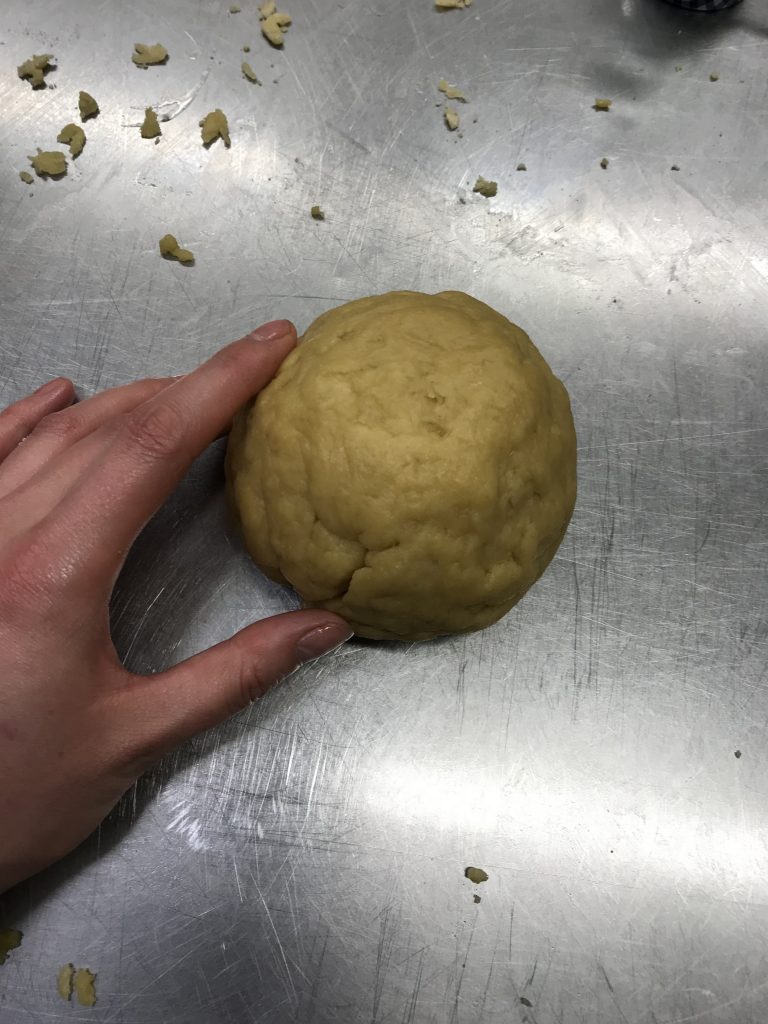
No pasta machine required!
This particular method was the good old manual way, no pasta machine just hard work and lots of rolling!
After spending some time kneading and rolling the dough, using polenta to stop it sticking, not flour which dries the dough out.
We began cutting our tagliatelle strips.
Immediately, I knew that I could’ve rolled my pasta thinner but I was halfway through the process and not about to stop now!

We then learned to cook our pasta – which for fresh is an incredibly quick process!
Pasta cooked, we put it in our takeaway box and went on to the next stage of the class..
Ravioli!
This is the element of the class I was most looking forward to. I love ravioli and eat it on a regular basis – usually with pesto (sidenote: have you tried the beetroot pesto from Waitrose? YUM!).
Now was the time to break out the pasta machines!

Peter explaining the different types and which one he recommended personally, how to steady it on your kitchen sideboard and then showed us the process by which to roll out the dough.
Pasta Machine for ravioli
Using the pasta machine was extremely satisfying and much easier than rolling by hand but lacked a little essence of accomplishment you got from rolling manually.
But, it helped immensely with rolling the dough thin enough to make my ravioli.
Once I had two strips of similar length I was able to fill my pieces and make my ravioli. Gently hugging the pasta dough around the filling before cutting with a scone cutter.

Hug your pasta around the filling 
A little less filling for this ravioli next time!
Again, the cooking process was quick.
On reflection, a little less filling was required. But, I was lucky that none of my ravioli burst open.
Laminated Pasta
Now this was fun! A couple of us had finished with our raviloli and tagliatelle earlier than the others so Peter showed us how to make a laminated pasta.
Laminated is what I called it, Peter called it something else fancy but I can’t remember!
Basically, between two sheets of very thin pasta that has been rolled in the machine, you place some fresh herbs, I used dill.

Rolling through the pasta machine stretches the herbs 
This both flavours the pasta and adds a beautiful pressed herb pattern. Peter used sage in his which looked incredible.
Pasta dressings
Peter didn’t just show us how to make the pasta, but also what to serve with it.
Some simple pasta “sauces” that pair perfectly with pasta. Even better, we got to try each of these sauces with some freshly made pasta by Peter and Amy.
Peter showed us:
- Aubergine
- Tomato concasse
- Sage butter
These were all lovely accompaniments to go with the pastas and so simple to make using fresh produce and herbs.
Grubs up!
To finish the evening off we were spoiled with a lovely spread of the freshly made pasta and dressings together with some beautifully roasted chicken.

The meal was served with Italian wines and lovely juices.
The group tucked into our lovely meal and chatted away whilst Peter and Amy did the washing up and transformed the kitchen back into its pre-class self. Let’s say, Pasta with Peter class of October 2018 weren’t the tidiest of cooks!
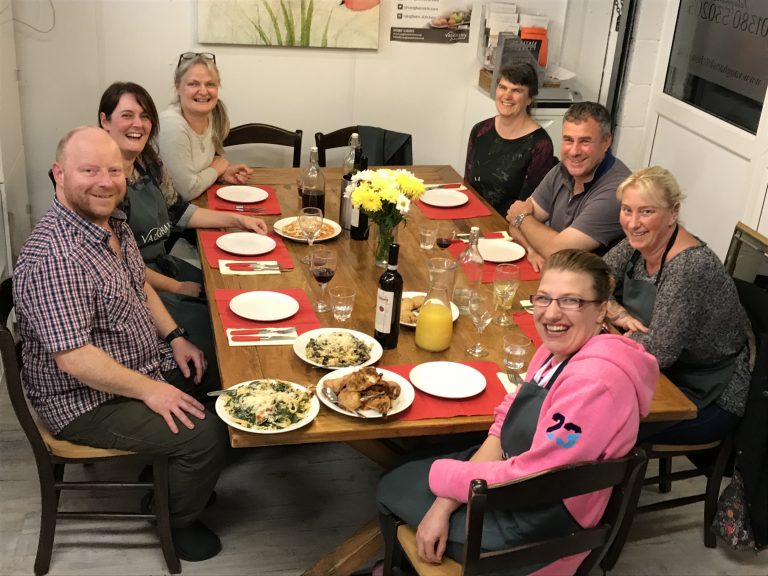
We were provided with a goodie bag containing our own made pastas and an information pack containing all the recipes from the evenings class.
Conclusion
In such a short amount of time we were shown the essential basics of making fresh pasta.
Peter had a wealth of knowledge and was an incredibly engaging tutor. He was clearly passionate about his craft which transferred to us as his students.
The cookery school itself, set within an industrial estate, was easy to access with plenty of parking. The facilities were clean and welcoming, it was well equipped with everything we needed to carry out the class.
Pasta with Peter costs £60 per attendee* and in my opinion was well worth the money.
Overall, I was impressed with both the school and Peter and would happily go back for other classes. Vaughan’s Cookery school has a wide range of reasonably priced classes, so is well worth a look if you’re seeking to improve, or learn new skills.
Back home
Along with the pasta I’d made, one of the goodies in my take away bag was some of the left over dough I’d made but hadn’t used.
This allowed me the opportunity to either freeze it for a later date or roll out for dinner within a couple of days.
Of course, I chose the latter. Choosing to expand on the skills I learned the previous evening.
I vigorously rolled out my remaining pasta, thinner than I had the previous evening, and cut into tagliatelle.
I served this with some Bolognese and my ravioli.
It’s true, even with my inexperience and first time made pasta, it was really delicious. Store bought really doesn’t compare to home made pasta.
I’ll definitely be making more pasta in future and with mum gifting me her pasta machine the possibilities are endless!
Peace out!
Jangles x
*My place at the cookery school was kindly organised by Visit Wiltshire in exchange for this blog post.


